More Filters
Search Filters

Reading offers students something genuinely different from the typical university town experience. Home to the University of Reading and its celebrated 320-acre Whiteknights campus, it sits at the heart of the Thames Valley with fast rail links into London, a surprisingly deep cultural heritage, and a student population that tends to settle in quickly and stay settled.
What makes Reading distinctive is the combination of a self-contained campus life and a town centre that functions well on its own terms. Students here rarely feel the need to commute into London for the essentials, though the option is always there when they want it. Reading is big enough to have everything you need but compact enough that you quickly get to know it.
The university itself draws students from over 160 countries and is often ranked in the top 30 UK universities. The Whiteknights campus, with lakes, conservation meadows and woodland, is one of the most beautiful university settings in the south of England and this green environment shapes daily life in ways that students often did not expect to appreciate.


Energetic City
Lorem ipsum dolor sit amet, consectetur adipiscing elit, sed do eiusmod tempor incididunt ut labore et dolore magna aliqua.
Major Universities
Lorem ipsum dolor sit amet, consectetur adipiscing elit, sed do eiusmod tempor incididunt ut labore et dolore magna aliqua.
And Much More...
Lorem ipsum dolor sit amet, consectetur adipiscing elit, sed do eiusmod tempor incididunt ut labore et dolore magna aliqua.
Reading moves fast, but you'll never move alone.


Lorem ipsum dolor sit amet, consectetur adipiscing elit, sed do eiusmod tempor incididunt ut labore et dolore magna aliqua.
Read More
Lorem ipsum dolor sit amet, consectetur adipiscing elit, sed do eiusmod tempor incididunt ut labore et dolore magna aliqua.
Read MoreLife in Reading revolves around two main centres, the Whiteknights campus and the town centre, both of which are connected by regular buses and a cycle route. Weekdays tend to follow an easy rhythm of lectures, the library, the Students' Union and the campus cafes and bars.
The SU building is a genuine social hub, with Mojo's Bar for cheap drinks, the 3SIXTY nightclub for bigger nights on campus, and a food court that keeps unusual hours for anyone pulling late sessions in the library.
Weekends open things up. The Oracle shopping centre and Riverside area pull students into town, and the stretch along the Kennet and Avon Canal fills up when the weather allows. Forbury Gardens in the town centre is a Victorian park that becomes something of a social focal point on warm evenings. Further out, the Thames Path and the countryside surrounding Reading remind students they are only a few minutes from genuinely rural Berkshire.
London is 23 to 30 minutes by train from Reading Station, so weekend trips to the capital are effortless.
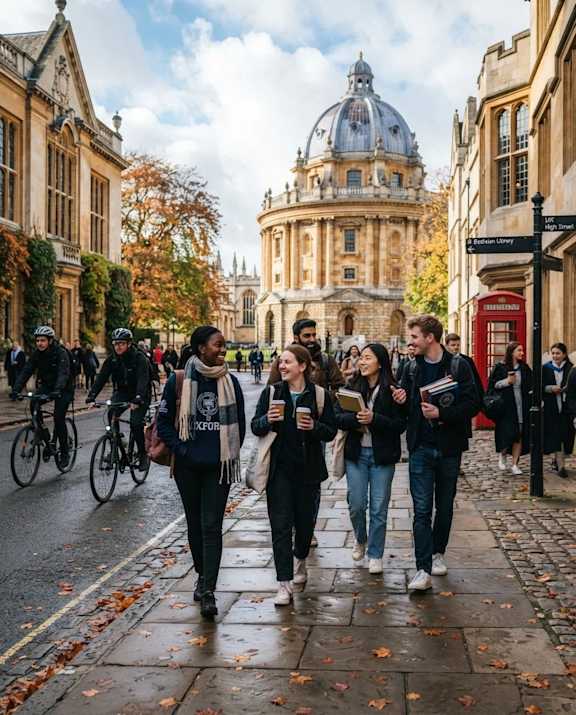
The University of Reading offers managed halls across the Whiteknights campus for first-year students, with many choosing halls to ease the transition into university life and meet people before moving into private accommodation.
After the first year, students typically move into shared houses in Earley, Newtown, Cemetery Junction, or Caversham, or into purpose-built student accommodation in or near the town centre.
Accommodation options include:
Best Places to Live in Reading as a Student
Where you choose to live has a significant effect on your life in Reading, and the options are varied enough that most students can find something that suits.
The university runs seven halls of residence on or close to Whiteknights campus, all within a 15-minute walk of the campus centre. For first-year students especially, living on campus makes settling in easier. You are immediately immersed in the university community, and everything you need is close by.
The Whiteknights campus is one of Reading's most distinctive selling points. The lakes, the Harris Garden, the woodland trails and the conservation meadows give daily life a green quality that most students do not associate with a university town of Reading's size.
Best for: First year students, those who want campus community, students who prefer not to commute.
Travel times: Campus accommodation can be more expensive than renting privately in town. The campus feels quieter than the town centre, which some students love, and others find limiting.
The Cemetery Junction area, east of the town centre, is one of the most popular locations for second and third year students. It is culturally diverse, walkable to campus and the town centre, and has a lived-in feel that purpose-built student areas sometimes lack. Housing is mainly Victorian terraces and converted flats.
Best for: Students wanting a balance of convenience plus character, so this is typically second and third year students, who want to be close to campus without being on it.
Travel times: Some streets differ considerably in quality so it's worth viewing accommodation carefully before committing.
Earley sits just south of the Whiteknights campus and is one of the more straightforward locations for students with busy timetables. It is quiet, residential, and close enough to walk to lectures while also being well served by bus routes into town.
Best for: Students at Whiteknights who want a short commute, those looking for quieter surroundings, shared houses.
Travel times: Less nightlife and fewer cafes and restaurants than closer-to-centre areas.
Caversham, north of Reading across the Thames, has a distinctly different feel from the rest of the town. It is more village than suburb, with independent cafes, riverside walks and good restaurants. It is popular with students who want somewhere quieter and do not mind the bus or bike ride into town.
Best for: Students who want riverside living, those who prefer a quieter residential base, anyone who enjoys independent cafes and a local feel.
Travel times: Further from campus. Rents can be relatively high given the area's desirability.
Living in the centre puts everything at your doorstep: the Oracle, the station, Gun Street, Friar Street and the full spread of bars and restaurants. It suits students who want to be in the middle of things and do not mind a slightly longer commute to campus.
Best for: Students who prioritise nightlife and convenience, those without cars who want to walk everywhere, students on London Road Campus.
Travel times: Busier and noisier, particularly at weekends. Accommodation is mainly apartments rather than shared houses.
The University of Reading has two main Reading campuses, and knowing which one your course is based on will shape your accommodation decision.
Whiteknights Campus is the main campus, set in 320 acres of parkland around two miles south of the town centre. This is where most students spend most of their time. The campus has its own library, sports facilities, Students' Union, cafes, bars and everything needed for day-to-day study and social life.
London Road Campus sits between Whiteknights and the town centre and is home to the Institute of Education and the Great Hall. Students based here have the advantage of being closer to both campus and town.
Greenlands Campus in Henley-upon-Thames is a specialist campus primarily used by postgraduate business students at Henley Business School. It sits in a genuinely beautiful riverside setting but requires separate travel considerations.
Because Whiteknights is two miles from the town centre, living on or near campus and living in the town centre represent genuinely different lifestyles. Many students begin in halls on campus and then move closer to town in their second year once they know which setup suits them better.

Student life at Reading is shaped heavily by the campus setting. Whiteknights is large, green and self-contained enough that many students spend significant portions of the week without leaving it. That is not the isolation it might sound like: the campus has its own social infrastructure, and the Students' Union runs hundreds of events, clubs and societies throughout the year.
Reading University Students' Union (RUSU) has more than 130 societies and sports clubs, covering the full range from academic and career-focused groups to culture, faith, politics and sport. Wednesday nights at the SU are a consistent fixture on the student calendar.
Students who want the scale and vibrancy of a city can reach London in under 30 minutes, Oxford in around 30 minutes, and Bristol in just over an hour. Reading's location in the Thames Valley means the surrounding area is also unusually rich: Henley-upon-Thames, Windsor and the Berkshire countryside are all within easy reach.
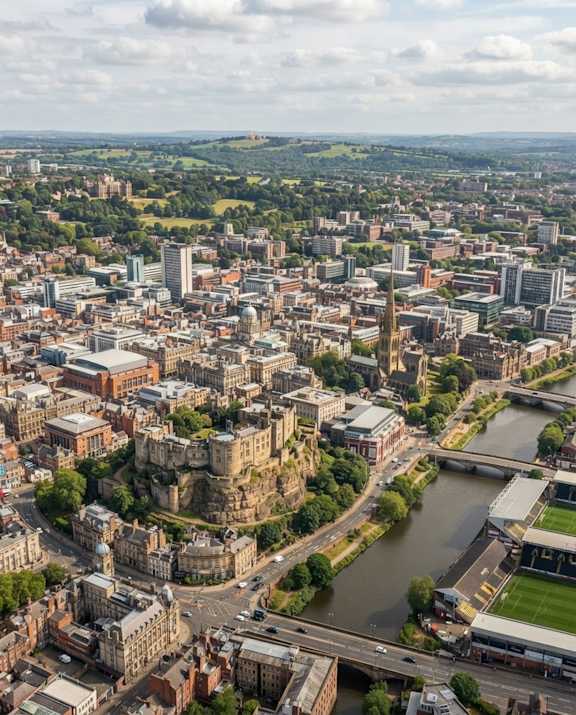

Student life at Reading is shaped heavily by the campus setting. Whiteknights is large, green and self-contained enough that many students spend significant portions of the week without leaving it. That is not the isolation it might sound like: the campus has its own social infrastructure, and the Students' Union runs hundreds of events, clubs and societies throughout the year.
Reading University Students' Union (RUSU) has more than 130 societies and sports clubs, covering the full range from academic and career-focused groups to culture, faith, politics and sport. Wednesday nights at the SU are a consistent fixture on the student calendar.
Students who want the scale and vibrancy of a city can reach London in under 30 minutes, Oxford in around 30 minutes, and Bristol in just over an hour. Reading's location in the Thames Valley means the surrounding area is also unusually rich: Henley-upon-Thames, Windsor and the Berkshire countryside are all within easy reach.
Reading is a town that has consistently surprised people who arrive expecting a generic commuter hub and find something considerably more interesting.
The town centre has a commercial energy, partly driven by its position as one of the major retail destinations in the south of England. The Oracle shopping centre and Riverside area anchor the centre, but the streets around Gun Street, Friar Street and the Market Place have their own independent character alongside the high street brands.
The River Kennet runs through the centre, meeting the Thames just outside town, and the canal-side stretch at the Oracle is one of the most pleasant spots in Reading during warmer months. Forbury Gardens, with its famous Maiwand Lion statue and Victorian bandstand, provides green space right in the heart of town.
What locals consistently say about Reading is that it functions well as a place to actually live rather than just visit. The transport connections give it the kind of reach that smaller towns cannot match, but the town's scale means daily life is manageable and neighbourhoods feel recognisable. Reading was named one of the best places to live in the UK by The Sunday Times in 2025, with particular praise for its transport links and educational offer.
Students who have spent time here describe a town that takes a little longer to reveal itself than more obviously attractive university cities, but rewards patience. The food scene, the music venues, the green spaces and the festival heritage all become clearer over time.
Reading's food scene reflects the diversity of its population in ways that go well beyond the obvious chains.
The town centre is genuinely international in its range. Oxford Road, running west from the centre, is one of the most diverse eating streets in the south of England outside London, with Pakistani, Bangladeshi, Indian, Lebanese and Chinese restaurants sitting alongside independent cafes and grocery shops. Students who find themselves on a tight budget and a tight schedule come back to this part of town regularly.
The Oracle Riverside area has the more familiar names: Bill's, in a converted Georgian church; Las Iguanas for Latin American food; Zerodegrees for pizza and craft beer brewed on site; and London Street Brasserie, one of Reading's most consistently rated independent restaurants, which sits directly beside the canal. For students looking for a sit-down meal in a place that feels like a proper occasion, the LSB has been the default choice for years.
Caversham has its own quieter food scene that students tend to discover in their second or third year. Independent restaurants, a farmers' market feel and the Thames-adjacent setting give it a different character from the town centre options.
Rosa's Thai and Pho both have Reading outposts for reliable, affordable Southeast Asian dining, while the twice-weekly street food market in the Market Place covers much of the rest of the world's cuisines across a compact area that takes around 10 minutes to walk. For craft beer specifically, Zerodegrees brews on site and has a riverside terrace that earns its reputation in good weather.
Reading's musical identity is defined by one thing above all others, and it is the most straightforward cultural credential any UK town can claim.
The Reading Festival has taken place on the banks of the Thames at Richfield Avenue every August Bank Holiday weekend since 1971, making it the longest-running popular music festival in the UK. Its origins go back further still, to the National Jazz and Blues Festival that settled in Reading after moving between several sites in the 1960s. Over five decades, it has hosted Nirvana's last UK concert, the rise of Britpop, the emergence of Arctic Monkeys, and, more recently, a broadening into hip-hop, grime, and electronic music that has kept it relevant to successive generations of students. For students studying in Reading, the festival isn't something they travel to; it happens in their town, which changes how they relate to it.
Beyond the festival, Reading has a live music infrastructure that punches above its weight. SUB89 is the key grassroots venue, with a track record of booking acts before they break nationally. The Oakford Social Club handles the more intimate aspects. The Hexagon, Reading's main concert hall, hosts touring shows across a range of genres.
Reading Museum covers the town's history from its Abbey ruins to its aviation heritage, and is free to enter. The Museum of English Rural Life, based on the University of Reading campus, is one of the most distinctive specialist museums in the UK: a vast collection covering farming, food and rural culture that sounds niche and turns out to be genuinely absorbing. It has become something of a cultural institution in its own right, partly due to its unusual online presence and the quality of its exhibitions.
For creative students who need London's scale, the full range of national galleries, theatres and music venues is under 30 minutes away.
Reading's events calendar is anchored by the Festival but extends well beyond it.
Throughout the year, the town hosts food festivals, including the Blue Collar Feastival in summer (street food and live music at Forbury Gardens), the Reading Real Ale and Jazz Festival, the Reading Film Festival, and a range of community events around Oracle Riverside and the town centre. The Caversham Farmers' Market runs monthly and draws residents from across the town.
Reading Pride at King's Meadow in late summer is one of the highlights of the community calendar, run entirely by volunteers and free to attend.
One of Reading's most underrated strengths is its access to green space, both within the town and immediately surrounding it.
Forbury Gardens in the town centre is a Victorian park with a bandstand, formal gardens and the famous Maiwand Lion, used by students, office workers and families throughout the week. The Thames Path, running through Reading and into Caversham, offers flat, easy riverside walking and cycling. Christchurch Meadows and King's Meadow flank the river between Reading Bridge and Caversham Bridge and are popular with students for picnics, outdoor study and summer gatherings.
Beyond the town, Dinton Pastures Country Park offers lakeside trails and water sports. The Chilterns are a short drive or bus ride away, providing proper hill walking within easy reach of campus.
The Whiteknights campus itself, with its two lakes, woodland, meadows and the Harris Garden, means that green space is not something students need to travel to find.
Reading is well connected by bus, train, and bike, and most students manage without a car for the entire duration of their degree.
The most important route for University of Reading students is the White Knight 20 bus, a direct, non-stop service between Reading Station and Whiteknights campus that runs every 10 minutes during term time, with the journey taking around 10 minutes. The Claret 21 covers the same route 24 hours a day, seven days a week, including nights. University of Reading students are eligible for discounted Boost fares on Reading Buses, bringing individual journey costs down significantly.
Reading Station is one of the busiest railway stations outside London, with direct services to London Paddington in around 25 minutes, Oxford in around 30 minutes, Bristol in just over an hour and direct links to Birmingham, Cardiff and Manchester. For students travelling to and from other parts of the UK, Reading's central position in the rail network is a genuine practical advantage.
For getting to airports, RailAir coaches run direct from Reading Station to Heathrow Terminals 2, 3, and 5, up to every 20 minutes on weekdays. A direct train service connects Reading to Gatwick in around 75 minutes.
Cycling is well supported on and around campus. Whiteknights has extensive secure cycle parking, and the university runs free cycle skills training. The town has a developing cycle network, and the canal towpath and Thames Path provide traffic-free routes for much of the town.
One practical note: Reading is one of Britain's best-connected rail hubs, but like many towns of its size it can suffer from road congestion, particularly around the university area at peak times. Students who rely on buses should build in a small buffer for busy periods.
Students who choose Reading and settle in well tend to talk about the same things: the campus, the Festival, the transport links, and the sense that the town has more going on than first impressions suggest.
The Whiteknights campus is genuinely beautiful and provides a quality of day-to-day environment that students who have experienced other universities often remark on. The Festival gives Reading a cultural identity that most university towns would be glad to have. The trains mean that London is never far away when students need it. And the food, music and social scene in the town, once explored properly, turn out to be considerably richer than the town's reputation sometimes suggests.
Reading is not the most obvious choice for students drawn to big city energy or a famous university town. But for students who want a strong campus environment, excellent transport, a serious music heritage, genuine green space and a town that works well as an actual place to live, it consistently delivers.

Reading's nightlife is concentrated and walkable, with most key venues within a short walk of each other around Gun Street, Friar Street and the town centre.
The Purple Turtle on Gun Street has been a staple of Reading nightlife for over 30 years. It is the kind of place that every student who passes through Reading ends up with stories about, with live music, themed nights, a heated garden, and an atmosphere that manages to feel genuinely independent rather than generic. It is not the loudest or the most polished venue in town, and that is precisely why it endures.
Club Era, which opened in 2023, is the biggest club in Reading, with a capacity of 1,000 across three bars and two rooms, open until 4:00 am and equipped with sound and lighting systems that make it the place to go for full-immersion nights. SUB89 on Friar Street operates at the other end of the scale: an underground club and live music venue that has been bringing touring bands, raves, comedy nights and club nights to Reading since 2009. Market House is one of those venues that works at almost any hour and for almost any group. It combines sourdough pizza, cocktails, a rooftop cinema, Sky and TNT sports, karaoke rooms, darts, ping pong, shuffleboard and comedy nights in a way that somehow holds together. Students use it for everything from casual midweek drinks to birthday celebrations.
Mojo's Bar at the Students' Union is the campus option: cheap drinks, live sports, pool table, outdoor seating, live music and karaoke, and the Exchange, with stock market-style drink pricing every Friday from 6:00 pm, which tends to pull students in regardless of their initial plans. Oakford Social Club on Blagrave Street handles the craft beer and live music end of the market, with something on most nights of the week and a reputation for finding good acts before they become well known.
When students want something bigger, London is 25 minutes away.