London living

The World's Best Student City, Period!

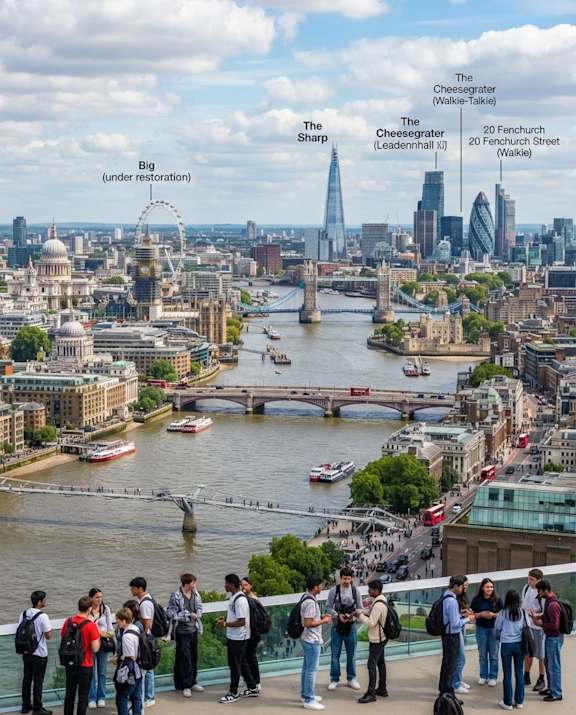
London is more than a student city. It is a global capital that also happens to be one of the best places in the world to study. Home to over 40 universities, including UCL, King’s College London, Imperial College London, the London School of Economics and Queen Mary University of London, the city welcomes more than 400,000 students each year. Every major industry, cultural institution, museum, theatre, music venue and career pathway is within reach, creating opportunities that few cities can match. The connections, experiences and professional networks built here often extend far beyond graduation.

Living in London does come with higher costs than most UK student cities, so careful budgeting and realistic planning are essential. Students who manage this balance well benefit from an exceptional university experience, combining world-class education with access to one of the most diverse, exciting and opportunity-rich cities in the world.

A group of people are walking down a cobblestone street.

London, at a Glance

A Global City

From world-class universities to international career opportunities, London offers one of the most dynamic student experiences anywhere in the world.

Culture, Every Corner

Discover iconic landmarks, diverse neighbourhoods, museums, galleries, music venues and food from every corner of the globe.

Endless Opportunities

Whether you're focused on study, networking or exploring, London provides unrivalled access to opportunities, experiences and connections.

where to live
What are my Options?

More Filters

Search Filters

Rent

 to 

Academic Term


Room Type Features


Property Features


Map

    Culture

    What makes London tick?

    History runs deep, but the city keeps moving forward.

    London living
    Student Accommodation In London.

    London's universities vary enormously in their accommodation provision. UCL, King's, Imperial and Queen Mary all offer managed halls for first-year students, with most providing a guarantee for first-years who apply before the deadline. From second year onwards, most London students move into private accommodation, private shared houses or purpose-built student accommodation across the city.

    Accommodation options include:

    • University halls
    • Shared houses and flat shares
    • Private apartments
    • Purpose-built student accommodation (PBSA)
    Where Are the Universities?

    Are you considering living in London? Before you decide, it's important to understand just how big the city is.

    You can't get to know London in just a week. With nine million people living in 32 boroughs across about 600 square miles, and a transport system that takes time to master, it can feel overwhelming at first. Students who try to learn the whole city right away often feel lost. Those who focus on getting to know their own area first and explore the rest over time usually settle in better and enjoy their experience much more.

    London is generally split into North, South, East, and West, with the River Thames running through the middle and serving as the main dividing line. People from North and South London really feel the difference. For example, someone from Brixton might not feel like they live in the same city as someone from Highgate, even though both are in inner London. In a way, both perspectives make sense.

    The Tube zones are another way London is organised. Zone 1 is the central area, including places like the City of London, Westminster, Soho, Covent Garden, and the main train stations. Zone 2 covers inner suburbs such as Brixton, Hackney, Islington, Shepherd's Bush, Clapham, and Stratford. Zones 3 and 4 reach into the outer suburbs. Usually, the farther you live from Zone 1, the cheaper the rent and the longer the commute. However, new lines like the Elizabeth Line and the Overground have made this less predictable.

    It's important to know which Tube lines go where. The Northern line runs from the north of the city, through the centre, and down to the south, passing places like Edgware, King's Cross, Euston, Bank, London Bridge, Balham, and Morden. The Piccadilly line connects Heathrow in the west, goes through the centre, and ends at Cockfosters in the north. The Elizabeth line, which is the newest, runs east to west from Reading and Heathrow through Paddington, Bond Street, Tottenham Court Road, and Liverpool Street, out to Shenfield and Abbey Wood. Each line has its own feel because it serves different communities. Students who live near a line that goes straight to their campus usually find London much easier to handle than those who have to change trains every day.

    Each area and Tube line corridor has neighbourhoods so different that moving between them can feel like visiting another city. This guide doesn't try to map all of London - no guide really can. Instead, it focuses on the areas where students usually live and what it's actually like to be there.

    Best Place to Live in London as a Student

    Best Places to Live in London

    North London:

    North London runs from the inner suburbs of Islington and Camden through Hackney and Stoke Newington on its eastern flank, through Holloway, Finsbury Park and Archway toward Hampstead and Highgate on its western flank, and on into Barnet and the outer boroughs. It is connected to central London primarily by the Northern line and the Victoria line, and its character ranges from the market-and-music culture of Camden to the leafy quiet of Muswell Hill.

    Camden is one of London's most immediately recognisable neighbourhoods and one of the most student-associated. The market, the music venues, the canal towpath and the density of bars and independent restaurants along Camden High Street and Chalk Farm Road create a social environment that draws students from across north and central London. Rents are relatively high for north London but lower than Zone 1. The Northern line connects Camden Town to Euston and King's Cross in under ten minutes, making it practical for UCL, King's and LSE students.

    Islington and Angel, immediately north of the City, is one of London's more consistently pleasant inner-suburb neighbourhoods. Upper Street's restaurant and bar scene is among the best in inner London, and the Northern line connection to the Strand and Euston is fast. Rents are high, but the quality of the neighbourhood and its transport connections tend to justify them for students who can afford it.

    Holloway and Archway offer more affordable North London options in the N7 and N19 postcodes, with Victorian terraces at lower rents than Camden or Islington, good bus connections, and proximity to the northern end of the Northern line. The area is less immediately polished than its neighbours but more affordable and increasingly well served by independent businesses.

    Hackney and Stoke Newington, on north-east London's boundary between north and east, offer one of the most culturally interesting student environments in the city. Church Street in Stoke Newington has one of London's best concentrations of independent restaurants and pubs. Hackney Central and London Fields are at the heart of the city's creative and arts scene. The Overground rather than the Tube is the primary connection here, which affects commute times to the West End and central campuses.

    East London:

    East London has been transformed more dramatically and more rapidly than any other part of the city over the past twenty years, and it continues to change. The 2012 Olympic Park regeneration opened up Stratford and the surrounding East End to development that is still ongoing. Creative industries, technology companies and arts organisations have settled in Shoreditch, Bethnal Green, Hackney and Dalston, and the student population has followed.

    Shoreditch and Brick Lane are the centre of East London's creative and alternative culture, with independent restaurants from dozens of global cuisines, vintage clothing markets, street art and the highest density of creative agencies and media companies in London. Liverpool Street is a five-minute Overground ride or a short walk away. Rents have risen significantly with demand but remain lower than Zone 1 equivalents. For students at Queen Mary University of London, whose Mile End campus is a few stops east, or at Central Saint Martins, whose King's Cross campus is accessible via Overground, East London provides a genuinely good base.

    Bethnal Green and Mile End are Queen Mary's natural territory, with the Mile End campus sitting at the heart of what is still one of London's most authentically East End neighbourhoods. The Roman Road and Bethnal Green Road markets, the Victoria Park neighbourhood and the canal towpath through Mile End provide everyday life at prices that remain accessible by inner London standards.

    Stratford and Westfield have been the fastest-changing parts of East London. UCL East's campus at the Olympic Park places students in the middle of a development zone that has added a concert venue, a museum, significant public space and residential neighbourhoods at a pace that makes it feel different from one year to the next. Rents are somewhat lower than equivalent inner East London, and the Elizabeth line connection to central London takes under fifteen minutes.

    Dalston and Hackney provide some of inner east London's most interesting independent culture. Dalston's bars, clubs and restaurants along Kingsland High Street and the surrounding streets are consistently among the most talked-about in London. The Overground connection runs through Dalston Junction and Hackney Central, connecting to London Bridge and Stratford on one axis and to Highbury and Islington and Clapham Junction on another.

    South London:

    South London is the most underrated part of the city for students, partly because it is not well served by the Underground. South London is often overlooked by students, partly because many areas don't have great Underground service and partly because its reputation used to lag behind North and East London. But things have changed a lot, and now South London has some of the most interesting, affordable, and community-focused student neighbourhoods in the city. The surrounding streets provide some of the most internationally diverse food and drink in London. The live music scene at the O2 Academy Brixton, the Windmill and the smaller venues around Coldharbour Lane is genuinely significant. Rents are higher than they were a decade ago but still more affordable than north London equivalents, and the Victoria line provides a direct connection to Brixton from King's Cross and Euston.

    Peckham has become one of the most talked-about areas in London over the past decade. The Bussey Building, Frank's Campari Bar on its roof and the surrounding concentration of independent restaurants, bars and arts spaces have made Peckham one of the most socially interesting places to live in south London. Rents remain more affordable than Brixton or Clapham. The Overground connects Peckham to London Bridge and the wider south London network.

    Clapham and Battersea provide a more conventional south London student environment, with Victorian terraced houses that are a bit cheaper than similar places in north London. Both areas have good transport links on the Northern and Victoria lines. Clapham High Street is packed with bars and restaurants that are popular with students on weekends. The redevelopment of Battersea Power Station has also brought new life to the riverside, and the area is still developing its own character.nd creative culture. The Overground and National Rail connections to London Bridge are the primary transport options. Rents are among the more affordable in inner south London.

    West London:

    West London runs from the central districts of Kensington and Chelsea westward through Shepherd's Bush, Hammersmith and Chiswick to Ealing and Acton. It is Imperial College's territory, with South Kensington housing the main campus and much of the residential area that serves it.

    South Kensington itself is one of the most prestigious addresses in London, and rents reflect that. The Natural History Museum, the V&A and the Science Museum are on the doorstep. The neighbourhood is beautiful but expensive, and students who cannot sustain Zone 1 South Kensington rents tend to move to Earl's Court, Shepherd's Bush or Hammersmith while maintaining a manageable commute on the Piccadilly or District line.

    Shepherd's Bush and Hammersmith provide west London's more affordable student base. The Westfield shopping centre at Shepherd's Bush offers retail and part-time work opportunities, and transport links via Shepherd's Bush Market, Shepherd's Bush, and Hammersmith stations cover multiple Tube lines and Overground services. Rents are notably lower than South Kensington while the commute to Imperial remains practical.

    Notting Hill and Holland Park are aspirational addresses that a small number of students can sustain, typically with significant financial support. The neighbourhood character, the Portobello Road Market and the architecture are exceptional. The Central, Circle, and District lines provide connections to central London and west London campuses.

    Central London:

    Central London, broadly Zone 1, provides the highest density of cultural, social and professional opportunity and the highest rents. The areas most relevant to student life are Bloomsbury, Fitzrovia and the immediately surrounding streets for UCL students; the Strand, Aldwych and Holborn areas for King's and LSE; and Elephant and Castle and Borough for students at multiple London institutions who want Zone 1 proximity at Zone 1.5 prices.

    Bloomsbury is the academic heart of London, with UCL, SOAS, the School of Oriental and African Studies and the British Museum all within its boundaries. The character is dense, literary and intellectually oriented. Russell Square and Gordon Square provide the garden squares that make central London habitable. Living in Bloomsbury works best for UCL students, who can walk to most campus buildings, and for students at neighbouring institutions who want Zone 1 accessibility.

    Borough and Bermondsey, south of the river and within easy walking distance of London Bridge station, offer some of the best-value Zone 1 or near-Zone 1 accommodation in London, plus a food and drink scene along Bermondsey Street and around Borough Market that is among the best in the city. The Jubilee line and the Overground connect the area efficiently to multiple campuses.

    The main thing to remember is that London rewards careful planning about where you live. Think about how close you want to be to campus, which Tube lines you need, your budget, the type of neighbourhood you like, and the kind of daily life you want. In London, these choices matter more than in other UK cities because a bad decision can cost you a lot of time, money, and energy over three years. Students who plan ahead usually settle in quickly and enjoy everything London has to offer. Those who just pick the first place they find often spend more time dealing with problems later.


    What Are My Options?
    Accommodation Overview

    London's accommodation market is the most expensive in the UK by a wide margin. Students who approach it without research and a clear budget often find the first year stressful in ways that better-prepared students avoid. 

    The core principle is straightforward: the closer to central London and the more modern the building, the higher the cost. Trading off some proximity or some modernity for a lower rent is the way most London students make the finances work.

    The Four Main Options

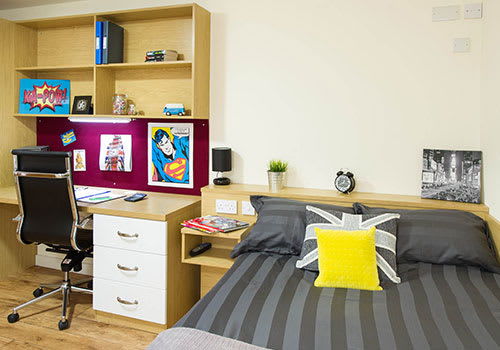
    University halls are the standard first-year option and the most straightforward. Most London universities guarantee hall accommodation to first-year students who apply before the deadline. Halls are fully furnished, all-bills-included and provide immediate access to a community of other new students. Given London's size and complexity, the social infrastructure of halls is particularly valuable for students arriving from outside the city.

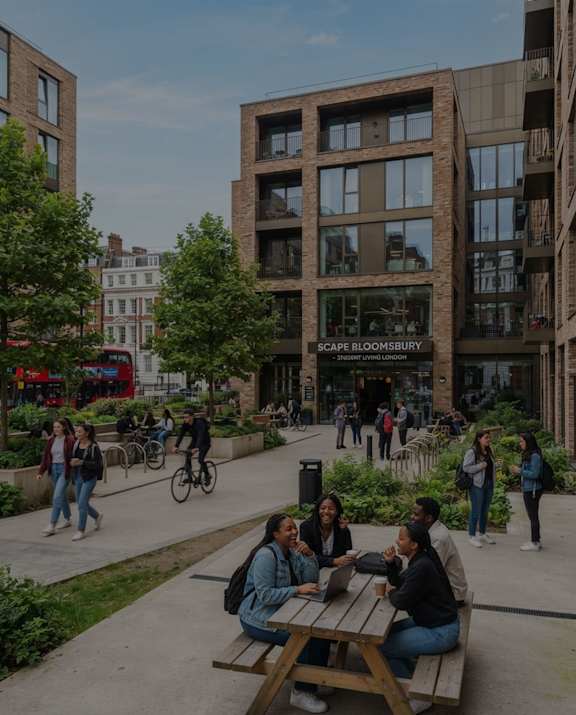
    Purpose-built student accommodation provides privately managed alternatives across the city, with buildings in most major student areas. PBSA in London typically includes all bills in a single weekly rent. The premium for London PBSA reflects the city's property market: expect to pay significantly more than in other cities for equivalent facilities, but the convenience and the community can justify the cost for many students.

    Shared flat shares are the standard option from second year onwards. London's private rental market is large and varied, but competition is intense and quality varies significantly. A shared flat in Zones 2 or 3 is typically more affordable than equivalent accommodation in Zone 1, and the Tube makes most Zone 2 and 3 areas functionally accessible. Rightmove, Zoopla and SpareRoom are the main platforms, and students who start looking early tend to secure the best options.

    Studios and one-bedroom flats at the premium end are popular with postgraduate and international students who can afford the privacy premium. Most are within PBSA or modern private buildings.

    What Things Cost

    London is the most expensive student accommodation market in the UK. For PBSA and halls, weekly rents run from around £250 to £350 per week for a standard non-ensuite room, £300 to £420 for an ensuite room, and £380 to £550 for a self-contained studio, all-inclusive. 

    Shared flat rooms in the private market run from £180 to £320 per week per person in most student areas, with Zone 1 at the top of that range and Zones 2 to 3 at the lower end.

    What Bills-Included Actually Means

    In PBSA and halls, bills-included covers electricity, heating, water, broadband and usually contents insurance. Always confirm TV licence inclusion. In private flat shares, bills are set up independently and split between flatmates. The difference between bills-included PBSA and private renting is often smaller than the headline figures suggest once bills are added to private rents.

    Fresh offers London students [room types, location, key inclusions] with all bills included and [key amenities]. It is worth comparing what is in the building alongside what is in the lease.

    Student Life
    What's Student Life Like?

    Student life in London is simultaneously the richest and the most demanding of any UK student city. The richness comes from the city itself: the access to professional networks, cultural institutions, diverse communities and experiences that are simply not available anywhere else in the UK. The demand comes from the cost, the scale and the effort required to find community and connection in a city of nine million people.

    The students who thrive in London tend to be the ones who treat the city as the primary resource, not just the university. They join societies, explore neighbourhoods, take up opportunities that arrive unexpectedly, and resist the pull to spend three years in the same few streets around campus. London rewards the curious and the engaged in ways that no other UK city quite matches.

    UCL has over 450 student societies. King's has more than 350. Imperial and LSE both have extensive programmes of events, societies, sports clubs and career development activities. Students who use these structures as a way into the city's wider life tend to find London exactly what its reputation suggests. Those who arrive expecting the city to come to them can find it overwhelming.

    wellbeing

    How Will I Stay Supported?

    London's scale can make support feel remote, which is why all major universities have invested significantly in making their wellbeing provision accessible rather than bureaucratic.

    Glasgow
    Health and Wellbeing at University College London

    UCL's Student Support and Wellbeing service offers counselling, mental health advisers, disability support, financial guidance and a Student Psychological and Counselling Services team. The university's Wellbeing Matters programme provides short online courses on managing specific challenges, and its 24-hour counselling helpline is available every day. UCL's disability support registration is confidential and includes adjustments for assessment and teaching, with information never appearing on references or transcripts.

    Health and Wellbeing at King’s College London

    King's College London's Student Services provide counselling, mental health support, disability services, financial advice and an international student support team. The university runs a Peer Supporter programme that trains students to provide peer-level support and runs regular drop-in sessions throughout term time. Both universities have signed up to the Student Minds University Mental Health Charter.

    Health and Wellbeing at Imperial College London

    Imperial College's Health and Wellbeing service covers counselling, mental health, disability support and the College Health Service providing GP care to registered students. LSE's Student Services include counselling, financial advice, disability support and the LSE Student Wellbeing Service that provides both in-person and online support.

    The sheer number of mental health services available in London as a city, including NHS IAPT services, Mind branches, crisis teams and specialist LGBTQ+ and cultural community support organisations, means that students in London have access to a wider support network than in any other UK city. The challenge is navigating what is available rather than its existence. Both universities and the NHS provide guided access to services, and the student unions at all major London universities maintain up-to-date directories of support options.

    Public Healthcare

    London's NHS provision is comprehensive, but demand is high. Students should register with a GP on arrival rather than waiting until they need one, as registration is required before non-emergency appointments. University health services at UCL, King's and Imperial operate as on-campus GP practices for registered students.

    Staying Active: Indoors and Outdoors

    All major London universities have sports facilities on or near campus. UCL's Bloomsbury Fitness on Gower Street provides gym access for students, with additional facilities at the Slade School of Art building. King's operates several facilities across its campuses. Imperial's athletics centre in Harlington provides extensive outdoor sports facilities, and its Ethos Sports Centre on campus covers gym, fitness classes and indoor sports.

    Beyond campus, London's parks provide running and cycling infrastructure on a scale that cities without London's park system cannot match. Outdoor swimming in the ponds at Hampstead Heath is one of London's genuine outdoor pleasures and is free to access. The climbing walls at the Arch Climbing Wall in Bermondsey and at other locations across the city are popular with students from multiple universities.

    London living
    How Will I Get Around and Study?

    Transport

    London's transport network is the most extensive in the UK and, with an 18+ Student Oyster card, among the most affordable for the distance it covers.

    The Underground (Tube) covers central London and extends to Zone 6 in most directions, running from approximately 5:00 am to midnight on weekdays, with 24-hour Night Tube service on Fridays and Saturdays on five lines. The Elizabeth Line, which opened fully in 2022, dramatically improved east-west connections across the city and connects Heathrow to central London in around thirty minutes. Overground services cover south, east and north London with connections that the Tube network does not serve directly.

    Buses cover every part of London not reached by rail, running 24 hours a day every day with frequent services on most routes. Night buses provide the main transport option after Tube closing time on weeknights.

    Cycling is practical in central London and increasingly so across the whole city, with a growing network of protected cycle lanes. Santander Cycles, the city's public bike hire scheme, has hundreds of docking stations across central and east London and is popular with students for short journeys.

    The key practical point for London students is the zones system: living in Zone 2 or 3 is significantly cheaper to rent, and the time difference for most journeys is ten to twenty minutes rather than the hour that students from outside London sometimes fear. Most UCL students in Zone 2 find their commute to Bloomsbury takes under thirty minutes door to door.

    Transport Times
    • London to Birmingham: approximately 1 hour 20 minutes by train from Euston
    • London to Manchester: approximately 2 hours by train from Euston
    • London to Edinburgh: approximately 4 hours 30 minutes by train from King's Cross
    • Bloomsbury (UCL) to South Kensington (Imperial): approximately 25 minutes by Tube
    • Central London to Heathrow: approximately 30 minutes via Elizabeth Line
    Cost of living

    Will it be affordable?

    Cost of Living for Students

    London is the most expensive student city in the UK, and that requires honest acknowledgement rather than qualification. Students who arrive with realistic expectations and a clear budget tend to manage well. Those who arrive without planning often find the first term financially destabilising.

    Monthly costs typically include:

    • Rent: £1,100 to £1,800 depending on area and property type
    • Utilities: £60 to £100 (or included in PBSA)
    • Groceries: £180 to £280 (lower with market shopping and discount supermarkets)
    • Transport: £80 to £160 (lower with 18+ Student Oyster card)
    • Social life: £100 to £250

    The 18+ Student Oyster card provides a 30% discount on Travelcard and Bus and Tram season tickets and is available to all full-time students at London institutions. This is one of the most important practical cost-savers for London students and should be applied for at the start of each year.

    How Much is Student Accommodation?

    PBSA and halls weekly rents run from around £250 to £550 per week depending on room type, location and provider, all-inclusive. Private shared rooms typically run from £180 to £320 per week with bills on top.

    Jobs for Students in London:

    London's job market is the UK's largest and most diverse, covering finance, technology, media, creative industries, hospitality, retail and the public sector. Most major employers in the UK have their headquarters or a significant presence in London, which gives students access to internship and part-time work opportunities that are simply not available in other cities. 

    Both term-time part-time work and summer internships are easier to find in London than anywhere else in the UK. Both UCL and King's have careers services rated among the best in the UK, with dedicated internship programmes, employer relationships and graduate employment rates that reflect the city's employment landscape.

    Blog

    Our Latest News & Articles

    A man in a denim shirt is sitting at a table with a pen in his hand.

    Reduce Exam Stress with These Seven Tips

    Stress is your natural response to high-pressure moments. When properly managed, it can...

    Two people are working on laptops at a table.

    How to Develop Leadership Skills as a Student

    Amongst the library dates, coffee stops, nights out and more, it's easy to forget...

    Two women sitting on a couch in a room with a brick wall.

    Your guide to our student assistance programme

    At Fresh, we've partnered with Health Assured to offer our residents access to...